

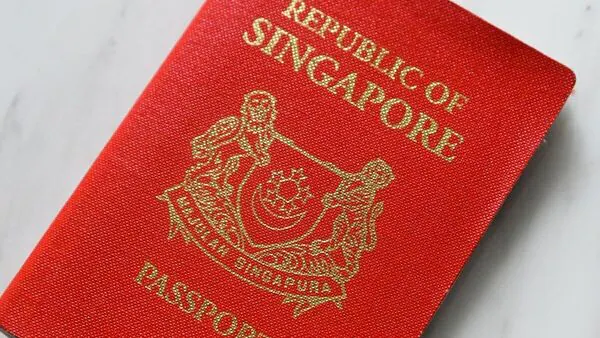
Top world’s Strongest Passport in 2025. Every January, the same question bubbles up among frequent flyers, digital nomads, and dream-itinerary planners: Which passport is the strongest in the world right now? In 2025, the answer—by the most widely referenced ranking—belongs to Singapore. According to the Henley Passport Index, Singaporean passport holders enjoy visa-free or visa-on-arrival access to 195 destinations, placing the city-state clearly at the top of the leaderboard.
If you’re new to the passport-power conversation, think of these rankings as a mobility snapshot: they estimate how far you can go, on short notice, with the least paperwork friction. Below, we’ll unpack how the Henley list is built, why Singapore leads, the broader trends behind 2025’s table, and what all of this means for travelers, students, and businesses. We’ll also show the top 10 for quick reference.HOME
Table of Contents
How “passport strength” is measured.
Not all rankings are created equal. The Henley Passport Index—arguably the most cited—counts the number of destinations a passport can enter without obtaining a visa in advance (visa-free or visa-on-arrival/eTA). Its data backbone is IATA’s global travel database, with ongoing verification and methodology published by Henley & Partners. In 2025, Henley compares 199 passports against 227 destinations, making it a broad, apples-to-apples measure of travel access
There are other indices (notably Arton Capital’s “Passport Index” and VisaGuide’s ranking), which sometimes produce different winners because they score or weight access differently and update on different cadences. For consistency, this article uses Henley’s January 2025 global ranking—the same one most major outlets cite when reporting “the world’s most powerful passports
The world’s strongest passports in 2025.
Henley’s 2025 list puts Singapore in first place, followed by Japan. Multiple European countries cluster tightly behind, and the United States ties for 9th. Here’s the top tier as published on January 7, 2025:
A few quick takeaways:
- Asia’s mobility trio remains formidable. Singapore leads, with Japan and South Korea sharing the high 190s band (Japan at 193; South Korea at 192 via the joint third tier).
- Europe dominates the pack just behind #1. The EU/Schengen ecosystem keeps a tight cluster between 190 and 192.
- The United States is strong, but no longer top five. At 186 destinations, the U.S. ties for 9th, reflecting a long-standing trend of slow relative decline while other countries expand reciprocal access.
Why Singapore is #1 in 2025
1) Dense network of reciprocal visa waivers. Singapore’s foreign policy has long emphasized trade openness, aviation connectivity, and pragmatic bilateral agreements. The cumulative effect is a passport that unlocks nearly everywhere people commonly travel—195 destinations as of January 2025.
2) Trusted-traveler reputation. Border authorities weigh overstay risk, document security, and return-ticket likelihood. Singapore’s strong compliance profile and advanced biometric passports reinforce trust and help maintain (and expand) visa-free corridors. (This point is an inference from the pattern Henley’s counts reflect; the index itself lists results, not causes.)
3) Aviation hub dynamics. With Changi as a premier global hub, Singapore benefits from being a connective tissue in global travel, often a catalyst for easier short-stay entry arrangements with partners. (Again, an inference consistent with the access pattern observed in the ranking.)
2025’s notable shifts and storylines
The EU cluster is neck-and-neck. If you scan ranks 3–5, you’ll notice tight bands of European passports separated by a single destination or two. That’s normal: small bilateral changes—say, a new eTA policy or a temporary waiver—can shuffle neighbors in this pack without signaling major geopolitical shifts.
The U.S. holds in the top 10—barely. With 186 destinations, the United States shares 9th with Estonia. That’s excellent in absolute terms, but it lags the 190+ club. The broader trend over the past decade has been relative decline, as several European and Asian countries secured just a few more visa waivers and eTA-style arrangements. (Multiple 2025 media reports noted the U.S. slipping to or hovering around 9th–10th compared with earlier years.)
The UAE’s rise continues. A top-10 tie at 185 destinations puts the United Arab Emirates shoulder-to-shoulder with Baltic peers this year, capping a decade of rapid mobility gains fueled by active diplomacy and global carrier connectivity.
A wide gap persists at the bottom. The bottom five—Afghanistan, Syria, Iraq, Yemen, Pakistan—have access to 26–33 destinations, underscoring the mobility divide and the personal/financial cost it imposes on citizens needing visas for even short stays.
Method behind the numbers (and why lists differ)
The Henley index gives one clear, consistent number: the count of destinations you can access without a prior visa. That makes it intuitive to compare year over year. But it also means:
- It doesn’t score the quality of access (e.g., whether “visa on arrival” is quick and digital or an hours-long queue).
- It doesn’t weigh destinations by popularity or economic importance (Paris and Paramaribo count the same).
- It doesn’t reflect processing times or multi-entry generosity for places that do require advance visas.
Other rankings tweak these assumptions. For example, Arton Capital’s “Passport Index” updates more frequently and uses its own Global Mobility Score. These methodological choices can produce occasional differences in the #1 spot across indices within the same year. If you’re choosing a citizenship-by-investment path or residency plan, it can be helpful to check multiple sources and look past the single-number headline.
What a #1 passport buys you
1) Spontaneity. With 195 destinations open visa-free or on arrival, Singaporeans can book last-minute trips for business or leisure without embassy appointments or long lead times. That’s a structural advantage for entrepreneurs and frequent regional travelers.
2) Lower friction and cost. Avoiding advance visas saves application fees, courier costs, and time away from work. For businesses that deploy staff across markets, these savings add up.
3) Diversified options in disruption. During airline irregular ops or geopolitical flare-ups that force rerouting, holders of top-tier passports often have more legal options to transit or enter alternates—especially in Europe and Asia’s Schengen-plus ecosystem. (This is a practical implication of the higher count of visa-free/eTA destinations reflected in the index.)
How countries climb (or fall) in the rankings
Reciprocity deals and eTAs. The easiest path to more mobility is signing reciprocal short-stay waivers or adding electronic travel authorizations for low-risk nationalities. These often come in bunches—one or two marquee agreements can trigger copycat deals across a region.
Passport security & overstay risk. Stronger biometric features and clean overstay statistics build trust. Immigration ministries quietly track these metrics, and positive data helps unlock new waivers.
Regional blocs matter. Schengen alignment or mutual-recognition frameworks create rising tides. That’s why so many European countries moved together between 190 and 192.
Consular relationships and aviation links. Countries with deep airline partnerships and heavy business travel tend to negotiate more flexible entry regimes over time.
2025 from a regional perspective
- Europe: Still the world’s most consistently privileged region for mobility, with a dozen-plus passports between 190–192 destinations in the 3rd–4th tiers. In practice, a German, Italian, Spanish, or Finnish traveler will encounter nearly identical friction.
- East Asia: Singapore leads; Japan and South Korea trail by just 2–3 destinations, reflecting years of proactive diplomacy, robust aviation, and low overstay profiles.
- Oceania: New Zealand sits in the 190 band (rank 5), and Australia at 189 (rank 6), both comfortably top-tier.
- North America: Canada (188, rank 7) pips the United States (186, rank 9) in 2025. The U.S. remains excellent but no longer an automatic top-five.
- Middle East: The UAE reaches the top 10 band with 185 destinations, an eye-catching climb compared with a decade ago. Israel sits at 170 (rank 19), while Qatar is at 112 (rank 47).
- Latin America: Chile leads the region at 176 (rank 16), with Argentina at 172 (rank 17) and Brazil at 171 (rank 18).
- Africa: Seychelles (156, rank 25), Mauritius (151, rank 29), and South Africa (106, rank 48) illustrate the region’s widespread.
- South Asia: India sits in the mid-80s by rank with 57 visa-free/VOA destinations in Henley’s January 2025 list, and Pakistan is in the bottom group at 33. (Note: figures vary across reports through the year; Henley’s snapshot above is the specific January 7, 2025 version.)
Practical tips to turn rankings into smoother trips
Check the current entry rules, not just the ranking. Visa policies can change mid-year; always verify with the destination’s official immigration site or airline TIMATIC before you fly. (Henley’s ranking is periodic; policies can update between editions.)
Leverage eTAs and pre-clearance. Even when a visa is required, many countries now offer quick electronic authorizations—often approved within minutes. Keep passport details consistent to avoid false mismatches.
Mind the stay length and purpose. “Visa-free” often means short stays for tourism or business (meetings). Paid work, study, or media assignments usually require a proper visa, even for top-tier passports.
Have proof of funds, onward tickets, and accommodation. Visa-free doesn’t mean question-free. Border agents can and do ask for supporting documents.
Beyond bragging rights: why mobility matters
- Economic opportunity. For entrepreneurs and SMEs, visa-free access means faster deal-making, easier conference hopping, and fewer trips derailed by consular backlogs.
- Education and collaboration. Researchers and students can attend short programs and symposia more easily, cross-pollinating ideas and forging partnerships.
- Resilience for families. In emergencies, mobility offers more evacuation and reunion options.
For governments, climbing the rankings isn’t just vanity—it’s a signal of trust, stability, and openness. It correlates with tourism receipts, trade ties, and soft power.https://www.bucketlistdestination.in/
Conclusion
In 2025, the world’s strongest passport—by the Henley Passport Index—is Singapore, with visa-free or visa-on-arrival access to 195 destinations. A tight phalanx of European passports, joined by Japan and South Korea, crowds just behind, while the United States holds a spot in the top 10 but no longer the very top tier. The underlying forces are clear: reciprocal waivers, trusted-traveler reputations, secure documents, and dense aviation/commerce links.
If you’re a traveler, these rankings are more than trivia. They’re a practical map of how quickly you can turn inspiration into an actual boarding pass. But remember, the number is a guide, not a guarantee. Always check the latest entry rules for your exact purpose and dates. Mobility is dynamic; in a world of shifting policies, the strongest passport is the one that keeps your plans flexible, your paperwork light, and your horizons open.
| Rank | Passport | Visa-free/VOA Destinations |
|---|---|---|
| 1 | Singapore | 195 |
| 2 | Japan | 193 |
| 3 | Finland; France; Germany; Italy; South Korea; Spain | 192 |
| 4 | Austria; Denmark; Ireland; Luxembourg; Netherlands; Norway; Sweden | 191 |
| 5 | Belgium; New Zealand; Portugal; Switzerland; United Kingdom | 190 |
| 6 | Australia; Greece | 189 |
| 7 | Canada; Malta; Poland | 188 |
| 8 | Czechia; Hungary | 187 |
| 9 | Estonia; United States | 186 |
| 10 | Latvia; Lithuania; Slovenia; United Arab Emirates | 185 |